

Rollators With Seat
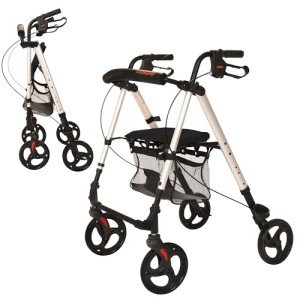
Rollators with seats allow users to continue their daily routines and remain mobile. Additional features include padded or unpadded seats, cups with insulated holders, and storage bins.
To ensure safe use, lubricate moving parts regularly and periodically check the brakes to make sure they function correctly. Also, make sure the height of the handle is in line with the user's natural wrist height when standing up straight.
Stability
Rollators with seats offer stability and support, as well as a handy place to rest during longer walks. These are ideal for those with some strength and balance but who require more stability in order to walk farther or who are prone to fatigue due to illness or injury.
The frame of a rolling walker is vital to its stability and longevity It's made of lightweight but sturdy materials like aluminum or stainless steel. This helps the device resist rapid turns and prevent tipping over. It also helps keep the user in control, increasing comfort and safety.
In addition to the frame and wheels, the wheels of a rollator are also a key factor in its stability and ability to handle a variety of surfaces. The majority of rollators have fixed and swivel front wheels as well as swivel back wheels, which makes it easier to maneuver on uneven terrain or in tight spaces. The large wheels are also able to handle outdoor conditions like pavement and gravel.
The brake system of a rollator is important as well. rollator walkers with seat have push-down brakes that require the user to apply downward pressure on the handle. These are easy to use, but they may not be effective if small and don't have enough weight to be able to activate them. Or if you're a heavier user who could accidentally pull them, and cause the device to slide away from you. The cable loop brake is a better option. It functions similar to brakes on a bicycle. This type of brake is easy to use and won't release until the handle is released.
Rollators with seats can be more stable if they feature an ergonomic design and seats that are wide and comfortable. A convenient storage bag or basket helps keep all the necessary accessories close at hand, and a lockable feature allows the user to secure the device when it's not being used. The Drive Nitro Sprint Rollator, our top pick, has adjustable handles that can be adjusted to accommodate most users. They're also easy to fold and transport making it an ideal choice for daily, regular use.
Comfort
Seats on rollators are ideal for resting. Walking is a strenuous exercise and a lot of people who use walkers must stop and sit down at times to catch their breath or ease pressure on their feet. The option of sitting on the built-in seat makes walking less stressful and tiring. It also improves overall health.
In contrast to standard walkers, which lack seats, many rollers have a cushioned seat and a basket for carrying items. Some rollators are height adjustable to accommodate people of various sizes. This is important because not everyone is of the same height. Being able to sit comfortably on a walker during long walks or longer outings is crucial.
When not in use the seat on a roll walker with a seat can be folded up and stored out of the way. This makes it easier to transport and store. Some models even come with bags to keep personal things. Since the hands of the rider are occupied with operating the brakes and handlebars having a spot to store items can help save space and keep them from being lost in the shuffle.
Some rollators have baskets that are accessible from the front that allows them to be used where a traditional walker may not be able to fit. Many rollators also come with handbrakes that are locked, which aid in ensuring safety and give the user greater control over speed.
When choosing a rollator it is important to take into consideration the capacity of the weight. While standard rollators are generally tested to be safe up to 250-350 pounds, there are bariatric models available that can support users weighing more than this.
A rollator is a valuable tool for anyone who requires assistance with mobility. Its stability can reduce the strain on the legs and the back, reducing discomfort and pain. It is also able to be used in a variety of environments, including busy indoor and outdoor spaces, enabling individuals to live life independently. With a range of options available there's bound to be a rollator seating that meets the specific needs and preferences of any user.
Safety
The walker with a seat gives users the chance to sit whenever they wish they want, which is ideal for those who get tired easily, experience frequent joint pain or need regular breaks. Some models include backrests, while others have seats that are built into the front. Many models have storage compartments that are ideal to carry personal items like bags or snacks.
Many walkers have locking brakes, making them safe to use when sitting. Squeezing the handle activates the brakes. Some walkers have push-down brakes, which allow users to lean on them for extra control. It's important to thoroughly read the instructions before buying a new model so that you understand how it works.
Consult your physician before using a model you're not familiar with. The local mobility store will also be happy to help you in finding the right walker to meet your needs. If you choose a folding model, make sure to test its ability to fold with no assistance prior to buying it. Some of these models can be difficult for you to maneuver once they are fully folded up, and the weight can quickly increase.
A three-wheel model could be an option for some people, as it's usually lighter than four-wheeled alternatives and can fit through narrower spaces. The main drawback of this kind of walker is that it doesn't have the stability of a four-wheeled model. It also may not be safe to use on stairs.
The maximum weight capacity of the walker is also important to consider. Standard models are tested to support 250-350 pounds, and bariatric models can handle more than 500 pounds. It's important to know your walker's weight capacity before buying, as an incorrectly rated one can be unsafe and even cause injury. It is also important to remember that a walker should never be used as a wheelchair because it doesn't provide the same stability. If you are having difficulty climbing stairs then a chair lift may be used to transport your walker upstairs.
Mobility
Rollators are a great choice for those who require mobility assistance especially when walking long distances or over difficult terrain. Rollators let people walk more comfortably and with greater support, which reduces strain on hips and knees. They also help maintain good posture. They are also more maneuverable than regular walkers and are able to be positioned in tight spaces.
One of the most important factors to consider when selecting a rolling walker are the dimensions and types of wheels and any other accessories that are included with the model chosen. For example, some models have built-in seats between the handlebars, making it simple to change from walking to resting during longer walks. They are typically cushioned to provide comfort over long periods of time and can fold away, making it simple to keep the bike in storage when not in use. Other options include storage baskets and tray that can be placed beneath the seat or on the frame to give the space needed to carry personal items.
If a user considers using a rolling walker with a seat, he or she should consult their doctor to determine if the device is suitable for their needs in mobility. They should also be aware of any restrictions or limitations that their doctor may impose and discuss how to use the equipment to maximize its effectiveness.
Another feature that can help users decide the best walker for them is the kind of brake system. For instance, some models feature push-down brakes which are activated by applying downward pressure to the handles. This kind of braking mechanism is easy to use and release when pressure is released. It might not be as effective for smaller users who might accidentally press the brakes when standing up. They may become disoriented or lose control of their device.
Other rollators with seats come with cable loop brake systems that function in a similar way to the brakes on bicycles. These systems are more intuitive and offer more reliable and consistent experience. Additionally they can be used in conjunction with the push-down brakes for additional safety and convenience.